"If the Son sets you free, you shall be free indeed" (Romans 8:36)


Showing posts with label Book of concord. Show all posts

Sunday, August 8, 2010

Life-long Lutheran Discovers Really Big Book (and loves it!)

I was raised Lutheran. Baptized into the faith through water and the Word when I was 20 days old. Brought to Sunday School as a youth and after attending Confirmation class, I was confirmed in the Evangelical Lutheran Church when I was 4,866 days old.
During High School, I decided that I didn't believe in Jesus or God His Father. I left the faith for a while, but by the grace of God, I was called back to saving faith by the Word in college. After again attending an LC–MS church for several years, I decided that I would attend seminary with the intention of serving God's church as an under-shepherd (pastor).
Imagine my surprise when I discovered the Really Big Book (otherwise known as the Book of Concord of 1580). My surprise, by the way, was not that there was a really big book published 400+ years ago; no, my surprise was that there was a book which contains the official confession of the Lutheran Church. My surprise was that, in order to become a pastor in the Missouri Synod, I would have to read and agree with (subscribe unconditionally to ) everything in that book "because" it faithfully teaches what the Bible reveals.
Hmmm... interesting. How come I've never even heard of this? 
And, wait a minute.
Everything? I have to agree with everything in that Really Big Book? You're going to ask me at my ordination if I believe that the entirety of the Book of Concord of 1580 (that self-same Really Big Book) is a "true exposition of Holy Scripture and a correct exhibition of the doctrine of the Evangelical Lutheran Church?" (LC-MS Agenda). Not only that, but the answer I will be required to give is: "Yes, I make these Confessions my own because they are in accord with the Word of God"?
Wow. Here I don't even know this book exists and now unconditional subscription to the content of that book is going to be a prerequisite to ordination? Not only that, but I need to be able to say openly, freely, and without reservation that what that book says is in fact my own confession— not the confession of those long-dead reforming saints, but MY OWN!
Truth be known, once I started to get over my shock, then I started to get angry. I was mad. "Don't we just need the bible?!?"
Thanks be to God that I didn't despair. I figured "it couldn't hurt to read the stupid thing" and see what it says. After all, if this Book of Concord is the official confession of the Evangelical Lutheran Church... if it is norm by which the Lutheran Church believes, teaches, and confesses what we believe the Bible says... I might as well give it a shot. Right?
So I started to read. And boy was I shocked! This Really Big Book was a treasure trove! It wasn't a bunch of debatable opinions by a bunch of really dead guys... it was a faithful teaching of what God reveals in Scripture. I began to realize just how silly my question of "Don't we just need the Bible?" was. The Book of Concord wasn't a replacement for the Bible. By no means! Rather, it was a faithful speaking of God's Word back again. And it was awesome! With the Book of Concord by my side, my Bible reading became the exciting adventure I never knew it could be. Before the Book of Concord, I was an intermittent Bible reader, after... I was a voracious reader, for the Bible had become for me that most delightful of feasts.
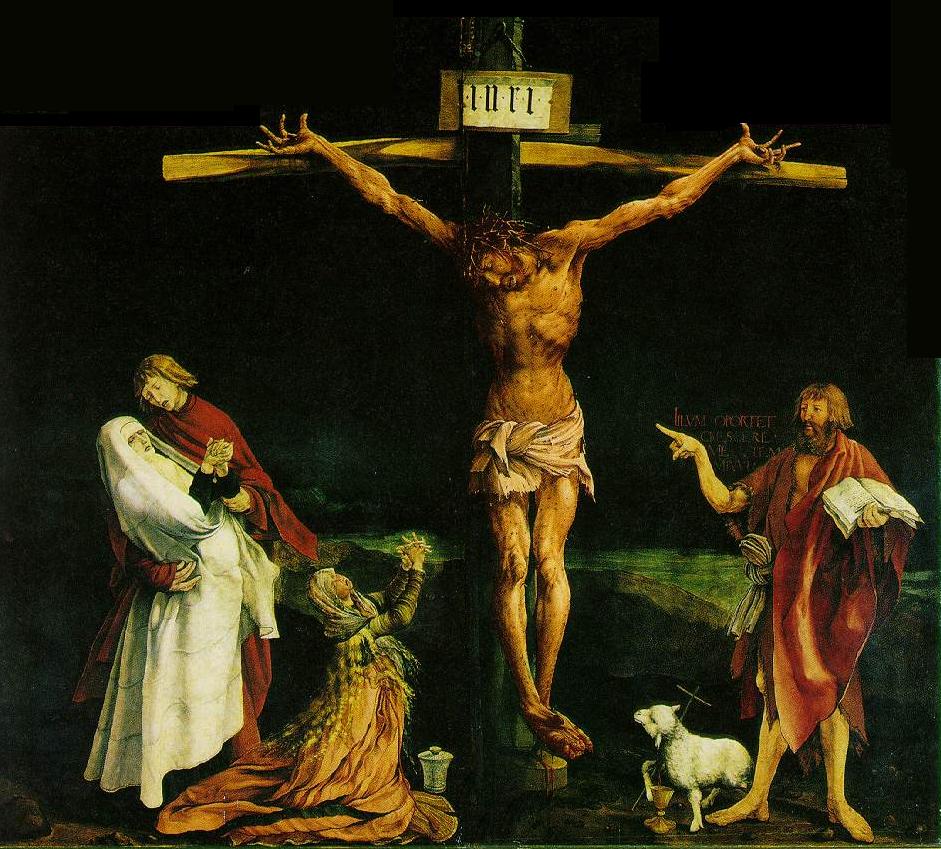
I still had some hard work to overcome a few things —like understanding the Bible's teaching on the doctrine of Election (which is HUGE!) and learning to value Baptism (which is also HUGE!)— but it's no exaggeration to say that my study of the Book of Concord transformed me. It opened my eyes to so much of what the Bible teaches. I went from being a life-long Lutheran who would have been comfortable joining your friendly Community Church down the street... to being a convicted Christian who would give his right hand before he'd let go of the theology confessed in the Lutheran confessions.
In the end, it's not about "being Lutheran." It's about "Christ and Him crucified" for you (1 Cor. 2:2). It's about God working through real Words and tangible Sacraments FOR YOU! It's about a radical grace that flies in the face of everything that world teaches. And I learned it all through the Book of Concord.
The Lord Jesus said, "Martha, Martha, you are anxious and troubled about many things, but only one thing is needful. Mary has chosen the good portion, which will not be taken away from her" (Luke 10:41–42). God bless you as you continue to sit at Jesus' feet!
SDG.
n.b. this post was partly inspired by a blog comment of Rev. Jonathan Fisk, whose journey in part mirrors my own. I even shamelessly stole some of his phrases! :) Thanks, Jonathan!

Sunday, March 14, 2010

The Importance of the Lutheran Confessions, part 2

...a continuation from yesterday's pos (go to part 1), a lengthy quotation from "Getting into The Theology of Concord: a study of the Book of Concord" by Robert D. Preus (St. Louis: Concordia Publishing House, 1978). Once your interest is piqued, go here to purchase the entire volume for yourself.

Lutherans have always held that creeds and confessions are necessary for the well-being of the church. Just as Christ's church and all Christians are called upon to confess their faith (Matt. 10:32; Rom. 10:9; 1 Peter 3:15; 1 John 4:2), so the church, if it is to continue to proclaim the pure Gospel in season and out of season, must for many reasons construct formal and permanent symbols and confessions and require pastors and teachers to subscribe these confessions. It is impossible for the church to be a nonconfessional church, just as impossible as to be a nonconfessing church. And so today and ever since the Reformation Lutheran churches over the world have required their pastors to subscribe the Lutheran Confessions.
What does this mean? With her confessions the church is speaking to the world, but also to God, who has spoken to her in His Word-speaking to Him in total commitment, speaking to Him by an unequivocal, unconditional response in the spirit of, "We believe, teach, and confess" (FC Ep, Rule and Norm, 1). This response is Scriptural, taken from Scripture itself. How often do we read in our Confessions that the teaching presented is "grounded in God's Word"! And so the Confessions are no more than a kind of "comprehensive summary, rule, and norm," grounded in the Word of God, "according to which all doctrines should be judged and the errors which intruded should be explained and decided in a Christian way" (FC Ep, Heading). This would be an unbelievably arrogant position to take, were it not for the fact that all the doctrine of our Confessions is diligently and faithfully drawn from Scripture.
And so when the Lutheran pastor subscribes the Lutheran Confessions (and the confirmand or layman confesses his belief in the Catechism [LC, Preface, 19]), this is a primary way in which he willingly and joyfully and without reservation or qualification confesses his faith and proclaims to the world what his belief and doctrine and confession really are. Dr. C. F. W. Walther, the father of the Missouri Synod, long ago explained the meaning of confessional subscription, and his words are as cogent today as when they were first written:
An unconditional subscription is the solemn declaration which the individual who wants to serve the church makes under oath (1) that he accepts the doctrinal content of our Symbolical Books, because he recognizes the fact that it is in 15 full agreement with Scripture and does not militate against Scripture in any point, whether that point be of major or minor importance; (2) that he therefore heartily believes in this divine truth and is determined to preach this doctrine.... Whether the subject be dealt with expressly or only incidentally, an unconditional subscription refers to the whole content of the Symbols and does not allow the subscriber to make any mental reservation in any point. Nor will he exclude such doctrines as are discussed incidentally in support of other doctrines, because the fact that they are so stamps them as irrevocable articles of faith and demands their joyful acceptance by everyone who subscribes the Symbols.
This is precisely how the Confessions themselves understand subscription (FC Ep, Rule and Norm, 3, 5, 6; SD, Rule and Norm, 1, 2, 5).
Needless to say, confessional subscription in the nature of the case is binding and unconditional. A subscription with qualifications or reservations is a contradiction in terms and dishonest.
Today many Lutherans claim that such an unconditional subscription is legalistic. Sometimes they assert that such a position is pompous and not even honest.
We might respond: What can possibly be wrong about confessing our faith freely and taking our confession seriously? For it is the freest and most joyful act in the world for those of us who have searched these great confessional writings and found them to be Scriptural and evangelical to subscribe them. Of course, to force or bribe or wheedle a person into subscribing them would be an awful sin and a denial of what our Confessions are, namely symbols, standards around which Christians rally willingly and joyfully in all their Christian freedom.
Confessions Are the Voice of the Church
When I was a boy my father told me a curious story about an occurrence in the 19th century. During the controversy among Lutherans concerning predestination, the old Norwegian Synod sided with the Missouri Synod. One member of the Norwegian Synod demurred vehemently and in his consternation said, "I am the Norwegian Synod." That, of course, was an absurdity, just as it would be absurd for me to claim, "I am the church." The church, as we shall see, 16 according to our Confessions is the total of all believers in Christ.
So it is, in a similar sense, with the Confessions. They do not belong to Luther or Melanchthon or those who, sometimes after great struggles, wrote them. They belong to those for whom they were written, the church. Princes subscribed the Augsburg Confession on behalf of their churches. Luther's catechisms were finally subscribed because the lay people had already accepted them. Thousands of clergy subscribed the entire Book of Concord, and the only reason the laity did not do so was the length of the book. All this suggests two things.
First, that every Lutheran ought to be concerned with what is rightfully his and ought to agree with the doctrine of the Confessions. But it suggests also that, if the Confessions really belong to the entire church, then everyone in the church ought to be united in the evangelical doctrine of the Confessions. That was the case when the Book of Concord was compiled in 1580, and it ought to be the case today.
Doctrinal Unanimity, a Blessing to the Church
The Church of the Reformation after the death of Luther in one respect resembled the congregation at Corinth in the first century: It was a church highly endowed with the gifts of the Spirit, but at the same time tragically confused and divided. To the Corinthian congregation Paul wrote: "Now I beseech you, brethren, by the name of our Lord Jesus Christ, that ye all speak the same thing, and that there be no divisions among you; but that ye be perfectly joined together in the same mind and in the same judgment" (1 Cor. 1:10). Paul had no quarrel with the diversity of spiritual gifts he found in that congregation; he rejoiced in all that, provided it did not polarize the church. But there is only one Christ, he says, who is undivided; one Gospel; and all Christians are to be of the same mind and judgment, united in their faith and doctrine.
The Church of the Reformation took Paul's admonition seriously when after Luther's death doctrinal controversies arose and threatened to destroy its unity in the Gospel. The Lutheran churches recognized that the unity of the Spirit which Paul stressed could only be manifested when there was unanimity "in doctrine and in all its articles and ... the right use of the holy sacraments" (FC SD, X, 31). Their program for 17 unity and concord in a troubled church went as follows: "The primary requirement for basic and permanent concord within the church is a summary formula and pattern, unanimously approved, in which the summarized doctrine commonly confessed by the churches of the pure Christian religion is drawn together out of the Word of God" (FC SD, Rule and Norm, 1).
What a remarkable statement! Here is not the cynical despairing of the possibility of doctrinal unity, so common to our relativistic age! not the sneering rejection of doctrinal unanimity as something inimical to man's freedom and autonomy. No, here is a statement of confidence in the unifying power of the Word and Spirit of God. These old Lutherans were convinced that doctrinal controversies were an offense and doctrinal aberrations pernicious to believers and unbelievers alike. "The opinions of the erring party cannot be tolerated in the church of God," they said, "much less be excused and defended" (FC SD, Intro., 9). But at the same time they maintained with Paul-like optimism that unity in doctrine and all its articles was not a remote possibility, not an impossible goal at the end of a rainbow, but a wonderful blessing that could be achieved by the church which would bow to the Word of God and allow the Spirit to rule in all its life.
And so the Lutheran confessors dare to produce a confession which all are asked to sign and which represents the unanimous declaration of all. They pledge themselves to the Book of Concord and confess: "We have from our hearts and with our mouths declared in mutual agreement that we shall neither prepare nor accept a different or a new confession of our faith. Rather, we pledge ourselves again to those public and well-known symbols or common confessions which have at all times and in all places been accepted in all the churches of the Augsburg Confession" (FC SD, Rule and Norm, 2). And they dare to maintain: "All doctrines should conform to the standards [the Lutheran Confessions] set forth above. Whatever is contrary to them should be rejected and condemned as opposed to the unanimous declaration of our faith" (FC Ep, Rule and Norm, 6). Do such statements reveal pride, cocksureness, narrowness? Not at all! But Pauline, Spirit-led confidence and optimism.
If only we could recapture this spirit today! Openness is an in-word today. And a "wholesome latitude" in doctrine is 18 considered by many Lutherans to be a positive blessing to the church. Not many years ago a Lutheran synod actually stated (but later modified, thank goodness): "We are firmly convinced that it is neither necessary nor possible to agree in all non-fundamental doctrines." But where do the Scriptures or our Confessions say such a thing? Where are we ever told that we Christians need not agree on what Scripture affirms? Yes, let us be open to people's desires and needs, to their diversity of gifts and opinions. But not to error. Let us rather give heed to Paul's words and speak the same thing and be perfectly joined together in the same mind and judgment. Let us face up to doctrinal differences wherever they arise and impinge upon our unity. And let us seek and treasure the doctrinal unanimity of which our Confessions speak. Then we may call ourselves Lutherans.

Saturday, March 13, 2010

The Importance of the Lutheran Confessions, part I

One of the things I talk about often is our "confession." Part of the essential foundation of being Lutheran means being built on the solid confession of Christ (see Matthew 15:16-19).

But, pastor, what exactly does that mean? What does it mean to "confess" Christ and what are these "Lutheran confessions" you keep talking about? (like a broken record! :)

It's an important question and one we must not fail to answer. As Luther once said, doctrine is no less than "God's Word and God's truth alone" (WA, 30 111, 343). Our confession of a pure and unchanging doctrine is one of the most amazing gifts we have been given - not only does it define who we are and what we believe as Lutherans - it is the clearest, truest, and most beautiful exposition of the Christian faith.

So allow me, please, to let the sainted Robert Preus (1) (1924-1995) tell you, for he can do so much more winsomely than ever I could. The following excerpt is part 1 of a two-part post from his book "Getting into the Theology of Concord" (2) available from Concordia Publishing House:

We use the word "confession" in a variety of ways today. A young man confesses his love for his fiancee. A criminal confesses to a felony. Christians confess their sins to a fellow believer or at the appropriate time in the church service. The Lutheran Confessions are something quite different from all that. They are written, formal statements with which a group of Christians, or an individual, declare to the world their faith, their deepest and undaunted convictions.
The Lutheran Confessions represent the result of more than 50 years of earnest endeavor by Martin Luther and his followers to give Biblical and clear expression to their religious convictions. The important word in that definition is the word "convictions." This word reveals the spirit in which the Lutheran Confessions were written, not a spirit of hesitation or doubt, but of deepest confidence that Lutherans, when they were writing and subscribing the Concessions and creeds, because their content was all drawn from the Word of God, Scripture, were affirming the truth, the saving truth.
Listen to what the Lutheran confessors say in the very last paragraph of the Book of Concord (FC SD, XII, 40), a statement that describes their assurance and their doctrinal certainty:
Therefore, it is our intent to give witness before God and all Christendom, among those who are alive today and those who will come after us, that the explanation here set forth regarding all the controversial articles of faith which we have addressed and explained—and no other explanation—is our teaching, faith, and confession. In it we shall appear before the judgment throne of Jesus Christ, by God's grace, with fearless hearts and thus give account of our faith, and we will neither secretly nor publicly speak or write anything contrary to it. Instead, on the strength of God's grace we intend to abide by this confession.
Here we observe that those who wrote and signed the Lutheran Confessions were not merely settling controversies, or expressing opinions, or devising new and clever doctrinal formulations. They were confessing their faith and expressing their determination never to depart from that confession. They take their stand as in the presence of God and stake their very salvation on the doctrine they confess. So confident are they of their position, so certain of their doctrine, that they dare bind not only themselves but also their posterity to it. And in another place they show their willingness to submit themselves not only to the content but to the very phrases of their confession: "We have determined not to depart even a finger's breadth either from the subjects themselves, or from the phrases which are found in [the Confessions]" (Preface of the Book of Concord, quoted from Concordia Triglotta [St. Louis: Concordia, 1921], p. 23).
I am sure that such a profession seems like an impossible anachronism today, a mark of inflexible pride which can no longer be respected or emulated by enlightened people. But certainly with such expressions of certainty the Confessions have captured the spirit of Christ and the New Testament. Our Lord taught with authority and promised His disciples that they would "know the truth." And how often does the inspired apostle Paul dogmatically affirm, "I know," "I speak the truth ... .. I am persuaded"!
The Lutheran confessors are convinced that Christians, basing their doctrine on Scripture and the promises of God, can be certain of their salvation and can formulate and confess true statements about God and all the articles of the Christian faith. It is this spirit in which all our Confessions were written and in which they so eloquently give witness to the Gospel of Christ.
 The Importance of Doctrine
According to the Lutheran Confessions, true doctrine, i. e., correct teaching about God and His activity toward us, is not some remote possibility but a marvelous fact, the result of God's grace; and this doctrine is demonstrated in the Confessions themselves. Those who wrote our Confessions were convinced of this (FC SD, Rule and Norm, 13); but more than that, they were persuaded that true doctrine, theology (which means language about God), is of inestimable importance to the church and to individual Christians. Why?
It is first and foremost by pure doctrine that we honor God and hallow His name, as we pray in the First Petition of the Small Catechism. "For," Luther says, "there is nothing he would rather hear than to have his glory and praise exalted above everything and his Word taught in its purity and cherished and treasured" (LC, 111, 48).
It is by agreement in the pure doctrine that permanent concord and harmony can be achieved in the church. "In order to preserve the pure doctrine and to maintain a thorough, lasting, and God-pleasing concord within the church, it is essential not only to present the true and wholesome doctrine correctly, but also to accuse the adversaries who teach otherwise (1 Tim. 3:9; Titus 1:9; 2 Tim. 2:24; 3:16)" (FC SD, Rule and Norm, 14).
Doctrine is important to Lutherans because they believe that Christian doctrine is not a human fabrication but originates in God. It is God's revealed teaching about Himself and all He has done for us in Christ. Therefore Luther says confidently and joyfully: "The doctrine is not ours but God's" (WA, 17 11, 233). And he will risk everything for the doctrine, for to compromise would do harm to God and to all the world. Luther's spirit is echoed throughout our Confessions as they affirm that their doctrine is "drawn from and conformed to the Word of God" (FC SD, Rule and Norm, 5, 10).
Pure Christian doctrine is important for our Lutheran Confessions because it brings eternal salvation. It "alone is our guide to salvation" (Preface to the Book of Concord, Concordia Triglotta, p. 11). For this reason our Confessions call it "heavenly doctrine" and they never fail to show and apply this saving aim of evangelical doctrine.
This emphasis on the importance of Christian doctrine is often not understood or appreciated in our day of relativism and indifference.
How often do modem church leaders declaim that the church will never achieve purity of doctrine; nor is it necessary! Therefore we should concentrate our efforts toward ministry to people in their needs. The longest article in our Confessions deals with good works and ministry to people in their needs (Ap, IV, 122-400) and insistently admonishes the church to follow such an enterprise. But this does not make doctrine less important! Today when people are leaving the church in droves and abandoning the faith, we must keep our priorities straight.
Luther says:
The great difference between doctrine and life is obvious, even as the difference between heaven and earth. Life may be unclean, sinful, and inconsistent; but doctrine must be pure, holy, sound, unchanging ... not a tittle or letter may be omitted, however much life may fail to meet the requirements of doctrine. This is so because doctrine is God's Word, and God's truth alone, whereas life is partly our own doing.... God will have patience with man's moral failings and imperfections and forgive them. But He cannot, will not, and shall not tolerate a man's altering or abolishing doctrine itself. For doctrine involves His exalted, divine Majesty itself (WA, 30 111, 343 f.)
Strong words! But this is the spirit of confessional Lutheranism.
Again theologians remind us today that what matters for the Christian is his faith relation to Christ: Faith is directed toward Christ and not a body of doctrine. Of course! And how often do our Confessions stress just this point! But the Christ in whom we believe and live and hope is not a phantom or myth, but the very Son of God who became a man, who really lived and suffered and died as our Substitute, and who rose again for our justification. In short, He is the Christ of whom we can speak meaningfully and cognitively; and the minute we begin to speak about Him and confess Him, we are speaking doctrine.
Again we are told that we are saved by Christ, not by pure doctrine. True! But does this make pure doctrine unimportant? We are not saved by good works or social concern either. But does that make social concern and works of love of no account? No, pure doctrine has its function. It enables us to glorify God with our lips, to teach and proclaim a pure and saving Gospel and not a false gospel, to bring poor sinners to know their true condition and to know God as He is, a wonderful and gracious Savior, and not to flounder seeking and chasing phantoms.
Let us take our Confessions seriously when they see pure doctrine as a wonderful gift and instrument for glorifying God and building His church. This was Paul's conviction: "Take heed unto thyself, and unto the doctrine; continue in them; for in doing this thou shalt both save thyself and them that hear thee" (1 Tim. 4:16).


  1. Robert D. Preuss was a giant among confessional Lutheranism. He was a Lutheran pastor, professor, author, and seminary president.
  2. "Getting into The Theology of Concord: a study of the Book of Concord" by Robert D. Preus (St. Louis: Concordia Publishing House, 1978).

Thursday, March 11, 2010

What's in a Name? Some thoughts on being "Lutheran"

It seems these days that names don't mean as much as they used to mean. Take the name "Lutheran," for example. Being a Lutheran used to mean something. Being a Lutheran used to mean a person who believes unabashedly in the Gospel of Jesus Christ crucified for us. Being a Lutheran used to mean confessing that we are justified by God entirely apart from works for the sake of Jesus. Being a Lutheran used to mean that you believe that the Word of God is powerful unto salvation and that God works through means such as Word and Sacrament to convert us to faith in Christ and sustain us in that faith. Being a Lutheran used to mean that we had a solid confession of Christ Jesus contained in the confessional documents of the Book of Concord of 1580— documents that were Christ-centered and to which we subscribed unconditionally because those documents were fully in accord with all of Scripture's teaching.

Apparently, being Lutheran doesn't mean that anymore. These days, being Lutheran can mean any number of things. Of course, this is nothing new. All the way back in 1866, Edward F. Moldehnke (WELS), wrote "much passes for Lutheran and so also is regarded as Lutheran which is not actually Lutheran" 1 To some, being Lutheran means that you follow certain traditions handed down from Lutheranism (it's much closer to tracing one's genealogy than affirming a statement of confession of faith in Christ). To others, being Lutheran means worshiping Luther instead of Christ (an accusation not that uncommon these days). On the extreme end of things, being Lutheran means using a formerly?-respectable name to justify all sorts of godless paganism and deluding people into thinking this is true Christianity.

Even still... I believe there is still something to being a Lutheran. I believe that if we stand up and stand firm, the Lutheran name can still mean something. It can still mean a person who unabashedly believes in Christ Jesus and Him alone for salvation. It can still mean a person who believes the truths of God's Word as they are correctly explained and taught in the Book of Concord, for to do so is to confess the Gospel of Jesus Christ. The Rev. Dr. A.L. Barry 2 (former president of the LC-MS) once wrote:
Genuine Lutherans, confessional Lutherans, dare to insist that "All doctrines should conform to the standards [the Lutheran Confessions] set forth above.  Whatever is contrary to them should be rejected and condemned as opposed to the unanimous declaration of our faith" (FC Ep.RN,6).  Such a statement may strike some as boastful, but it is not. Rather, it is an expression of the Spirit-led confidence that moves us to speak of the one true faith before the world. To be a Lutheran is to be one who honors the Word of God. That Word makes it clear that it is God's desire for His church to be in agreement about doctrine, and to be of one mind, living at peace with one another (1 Cor.1:10; 2 Cor.13:11).
It is for that reason that we deeply treasure the precious confession of Christian truth that we have in the Book of Concord.  For confessional Lutherans, there is no other collection of documents, or statements, or books that so clearly, accurately and comfortingly presents the teachings of God's Word and reveals the Biblical Gospel as does our Book of Concord.
Hand-in-hand with our commitment to pure teaching and confession of the faith, is, and always must be, our equally strong commitment to reaching out boldly with the Gospel and speaking God’s truth to the world. That is what "confession" of the faith is all about, in the final analysis. Indeed, "It is written: 'I believed; therefore I have spoken.' With that same spirit of faith we also believe and therefore speak”(2 Cor.4:13).This is what it means to be a Lutheran.

SDG.

  1. originally published in Evangelisch-Lutherisches Gemeinde-Blatt, Vol. 1, Watertown, WI: April 1866). Translated into English by Nathaniel Biebert and printed in "Studium Excitare: The Journal of Confessional Language Studies at Martin Luther College, 2010, issue 12.
  2. Barry, A.L., "What about: Being a Lutheran," Lutheran Church–Missouri Synod: Office of the President, 2001.